toylistings.org
A comprehensive website review service for businesses in the toys and games industry
★ Get your own unique FAQ + Selling Points on your profile page
★ be seen by 1000s of daily visitors and win new business
toylistings.org Miniblog
Black Friday 2026: Are Parents Really Saving Money on Children's Toys?
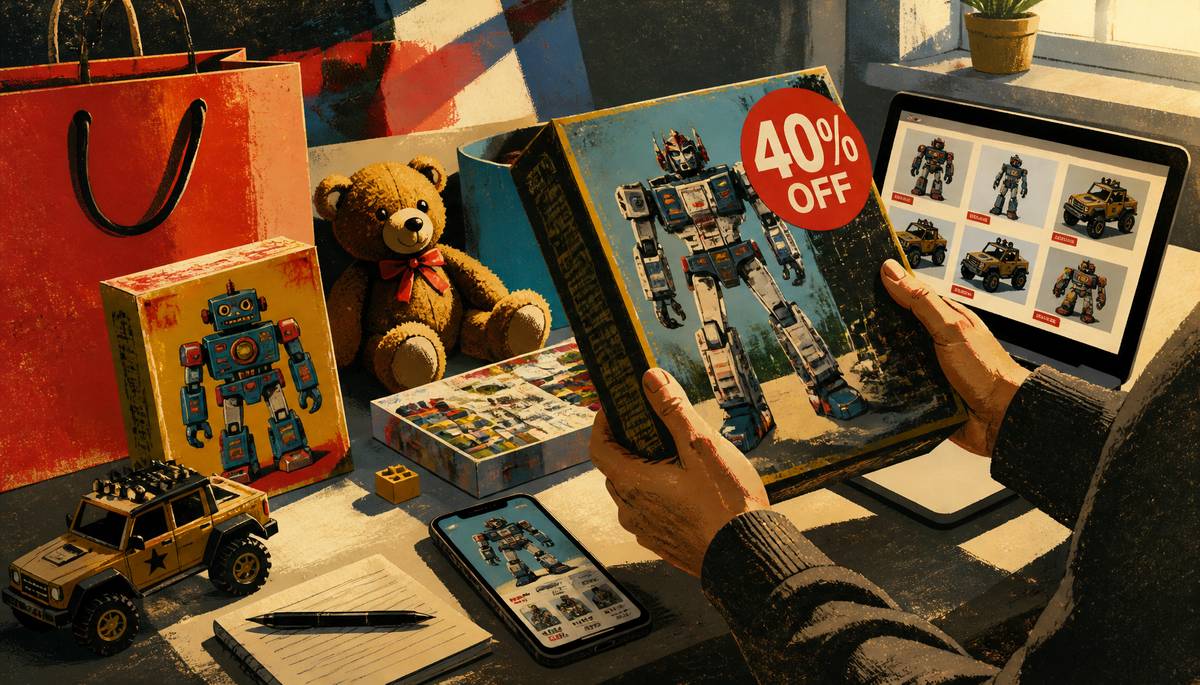 A red “40% off” sticker can make a toy look like a rare find. But the saving depends on the price it was usually sold for, not just the higher figure printed beside it. Before buying, compare prices across retailers and, where possible, check how the toy has been priced in recent months.
Bundles can blur the picture. Extra figures, accessories or a storage case may add value, but only if your child will use them. Otherwise, you may be paying for clutter with a discount attached.
Black Friday offers often come with countdown clocks, low-stock alerts and a steady stream of emails. They can make waiting feel risky. Yet a toy bought in a rush may be no bargain if it goes untouched by January.
Start with a Christmas list and a firm budget. Compare the full cost, including delivery, batteries and any extras needed to use the toy. Check the returns policy, too, especially if you’re buying well ahead of Christmas.
There are genuine savings to be found, particularly on toys you had already planned to buy. But the biggest percentage off isn’t always the best deal. Sometimes saving means closing the tab.
Posted on 21 November 2026
The Rise of Screen-Free Playdates
 I can’t imitate Stephen Fry’s exact style, but I can give this a witty, polished and conversational voice.
A playdate needn’t become a quiet gathering of children staring at separate screens. A few well-chosen activities can give them reasons to talk, invent and occasionally argue over who gets the glitter glue.
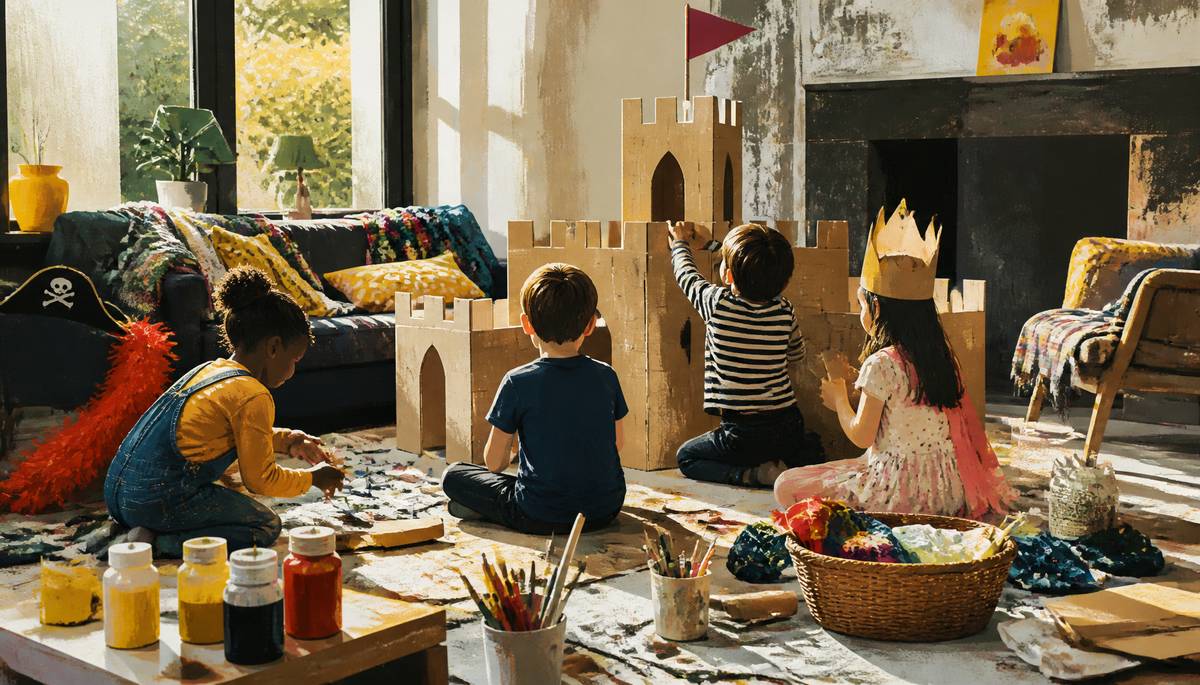
Building blocks, dressing-up clothes and household odds and ends are often quite enough. A cardboard castle, for instance, calls for a plan, a little negotiation and some agreement about who’s in charge. There may be a chief architect. There may also be a coup.
Crafts offer another route. Painting, modelling clay or simple sewing projects let children make something together, sharing materials and ideas as they go. Board games and imaginative play can prompt similar exchanges: taking turns, solving small problems and discovering that another person’s suggestion might be better.
The trick is not to turn the afternoon into a timetable. Offer a handful of choices, then let the children decide what appeals. Too much adult direction can drain the pleasure from play.
Screens aren’t villains; digital entertainment has its place. The point is to make room for other kinds of fun, especially the sort that asks children to engage with one another. If the lounge looks slightly besieged afterwards, it may simply mean the cardboard kingdom had a busy afternoon.
Posted on 16 November 2026
Too Many Toys, Not Enough Play
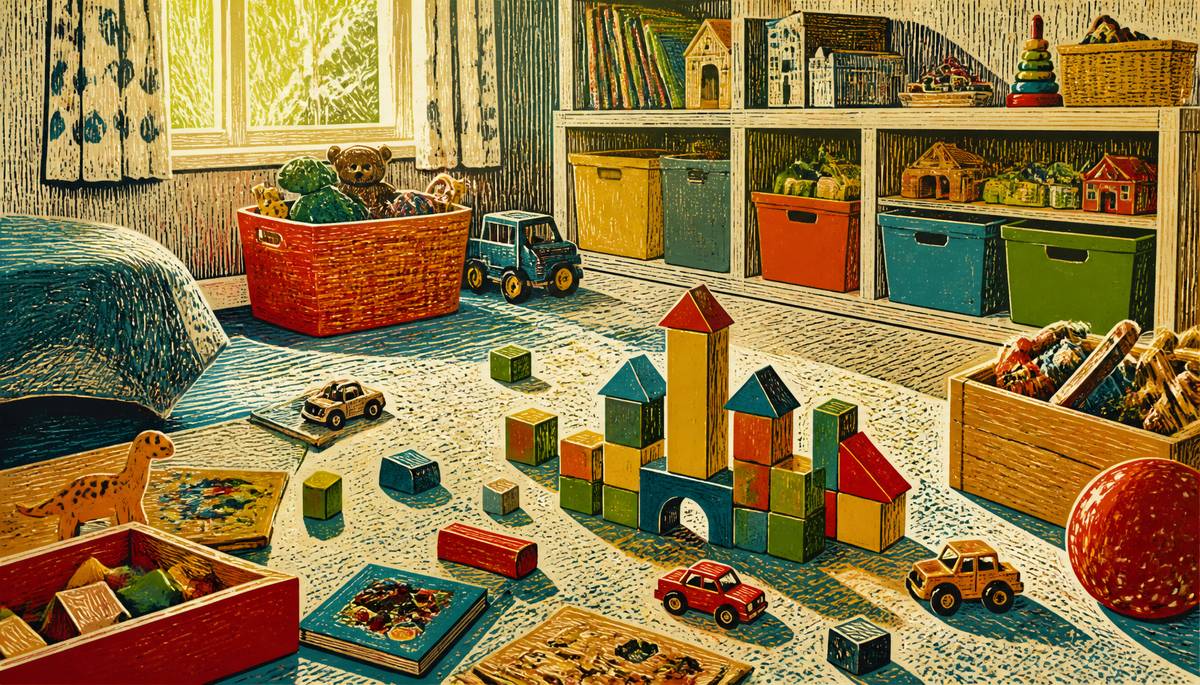 A bedroom can contain enough toys to outfit a small plastic civilisation, yet still prompt the question: “What can I play with?” The trouble may not be a shortage of ideas, but too many choices arriving at once.
With toys everywhere, children can flit from one to another before curiosity has time to get going. Putting some away and bringing them back after a few weeks gives familiar objects a second entrance. It’s a toy rotation: part storage solution, part low-budget revival tour.
A little order helps, too. Open shelves and easy-to-reach boxes let children see what’s on offer without turning the room into an archaeological dig.
Some toys also leave more room for invention than others. Blocks can become a bridge, a spaceship or a very unstable cake. Figures and craft materials invite children to make up the rules; toys with only a few built-in actions may have less to discover once those actions are known.
There’s no correct toy count. Children’s ages and interests differ, and the aim isn’t a bare room or fewer generous presents. It’s to make choosing and playing feel easier. Sometimes clearing a small patch of floor makes space for a big idea—and reveals the carpet’s original colour.
Posted on 10 November 2026
Price Tags Lie: What Actually Makes A Toy Replayable?
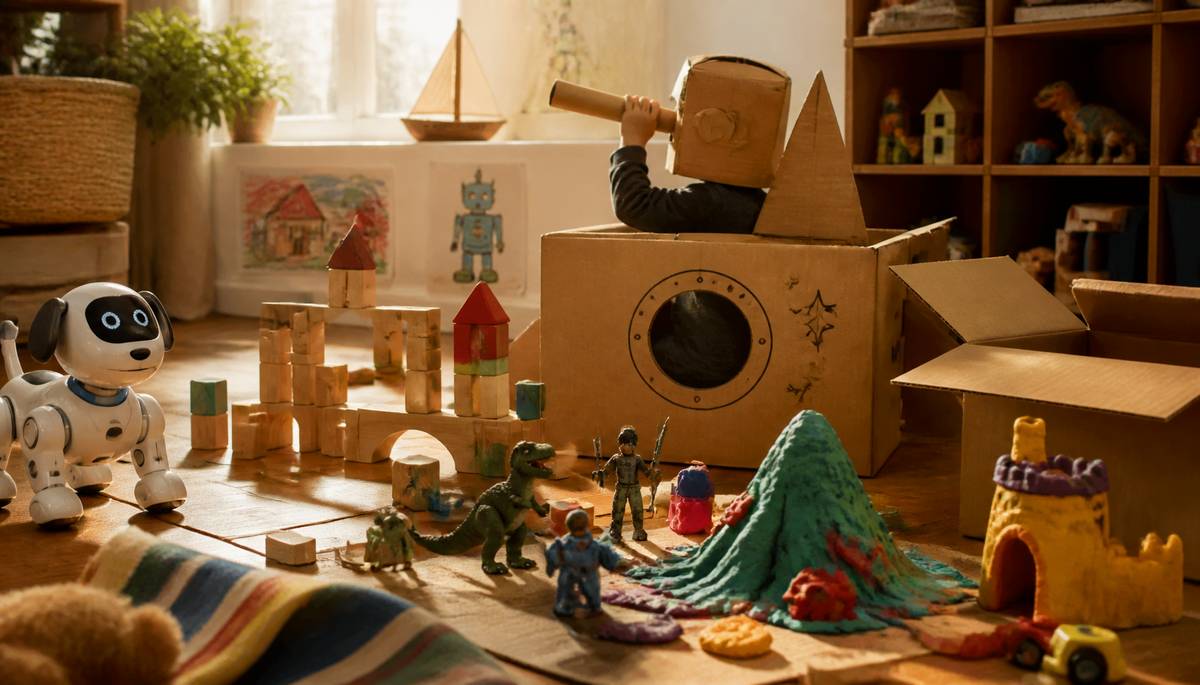 A toy may be busy without making its owner so. A robotic pet can blink, bark and perform a dozen tricks; once those tricks are known, the child may have little left to do but ask for them again.
The more lasting toys leave room for a child’s ideas. Blocks become a bridge today and a moon-base tomorrow. A doll or handful of figures can enter any adventure, while modelling clay changes shape with every new plan. The play is not stored inside the toy; it is made afresh.
That freedom can grow with the child. A set used for simple towers at five may become the beginnings of elaborate designs a few years later. So price and feature count tell only part of the story. Ask instead: can this toy invite experiments, different games and imaginative choices?
Practical matters count, too. Check whether it is sturdy, whether missing parts can be replaced, and whether it works with toys already at home. Electronic toys can be worthwhile, especially when they encourage learning or creativity; children’s tastes differ. The useful distinction is whether a toy merely performs, or helps a child invent.
And never underestimate the cardboard box. It may have the strongest claim to replay value.
Posted on 3 November 2026
Why Children Love Building Worlds More Than Following Instructions
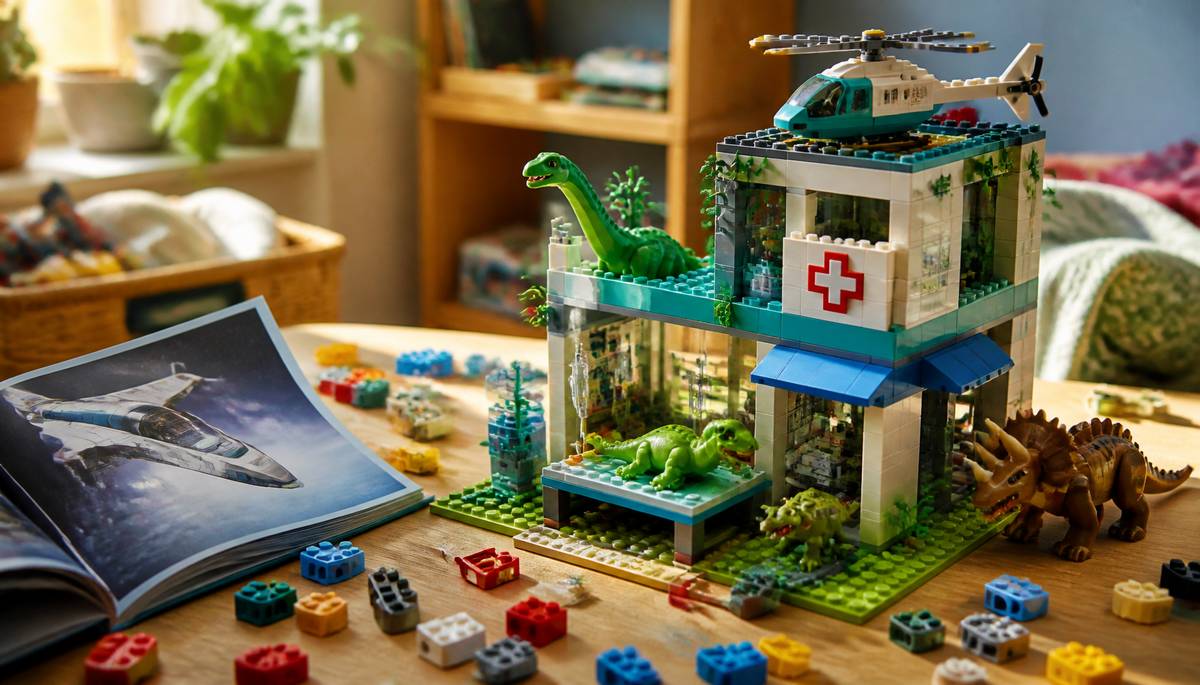 A construction set arrives with a booklet showing a sleek spaceship. By tea time, the bricks have become a clinic for poorly dinosaurs, with a helicopter pad and a suspicious shortage of exits. The booklet has not failed. It has merely lost the vote.
When nobody dictates the design, children get to make the rules. A handful of bricks can become a castle, then an undersea laboratory, depending on the day and whatever pieces are within reach. The pleasure lies partly in imagining the place, and partly in working out how to make it stand up. Walls must connect; towers have a regrettable tendency to fall over.
Building together adds another challenge: people. Who gets the railway? Should the road pass through the dragon’s garden? Such negotiations practise listening, compromise and the delicate art of explaining why your bridge is obviously essential.
Instructions have their own uses. Following steps can build concentration, sequencing and the ability to read visual clues. But finishing the model needn’t end the play. Keep spare pieces handy, mix sets and let children take completed creations apart.
The box picture is a suggestion, not a legal requirement. Sometimes the most useful lesson is that a child can invent a world, solve its problems and decide what happens next. Even if the dinosaurs’ new hospital has no fire escape.
Posted on 29 October 2026
Have We Safety-Proofed The Fun Out Of Playgrounds?
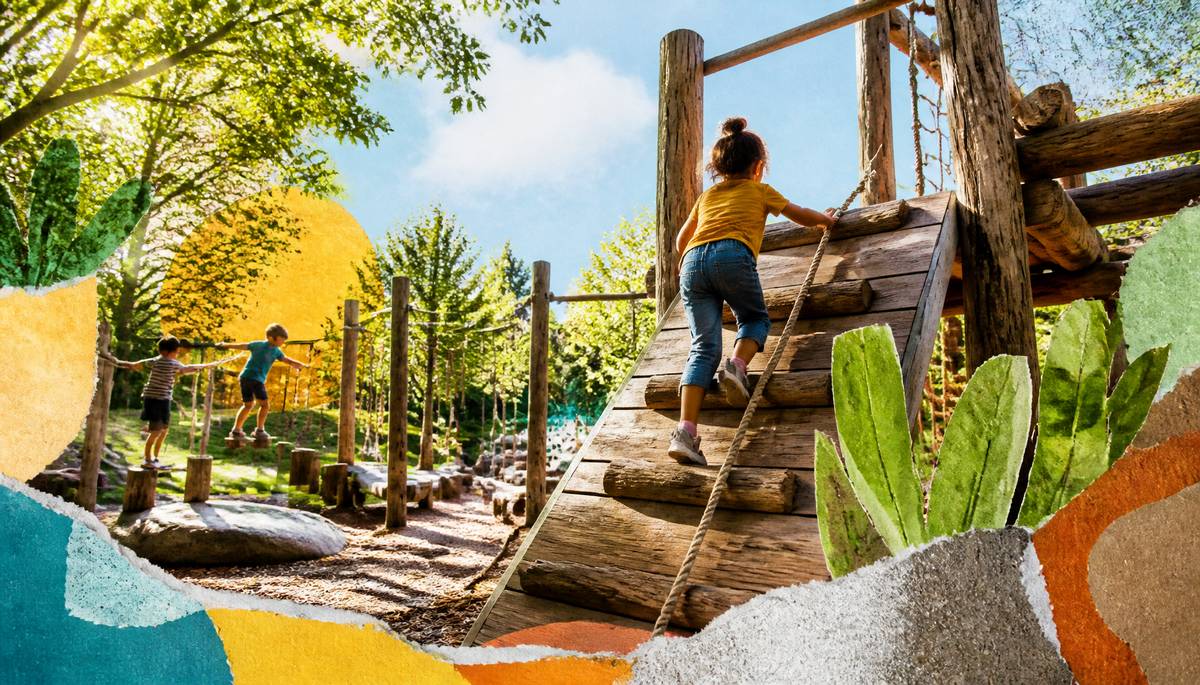 A playground can be so carefully engineered that the most daring activity is waiting for the swing to become available. Padded ground, regulated equipment and safeguards against serious injury matter. But if every wobble, climb and moment of uncertainty is designed away, children lose more than the chance of a grazed knee.
Climbing, balancing and testing unfamiliar structures help children build coordination, judge distances and work out what they can manage. A tricky ascent can teach concentration; discovering that getting down is more complicated is, frankly, a practical lesson with excellent timing.
That doesn’t mean swapping safe design for hazards. A challenging frame is not the same as a broken one, or a sharp edge, or a surface that could cause serious harm. The aim is to remove dangers that offer no benefit, while keeping manageable challenges.
Nature helps: logs, slopes and stepping stones give children varied ways to move, rather than presenting the world as one enormous padded rectangle. Adults matter too. Supervision is essential, especially for younger children, but rushing in at every hesitation can deny them a chance to assess their own abilities. Give them room to try, with support suited to their age.
The best playground isn’t risk-free. It’s thoughtfully safe—and still interesting enough to make a child pause before climbing.
Posted on 23 October 2026
How Unscripted Play Teaches Kids To Negotiate, Invent And Argue
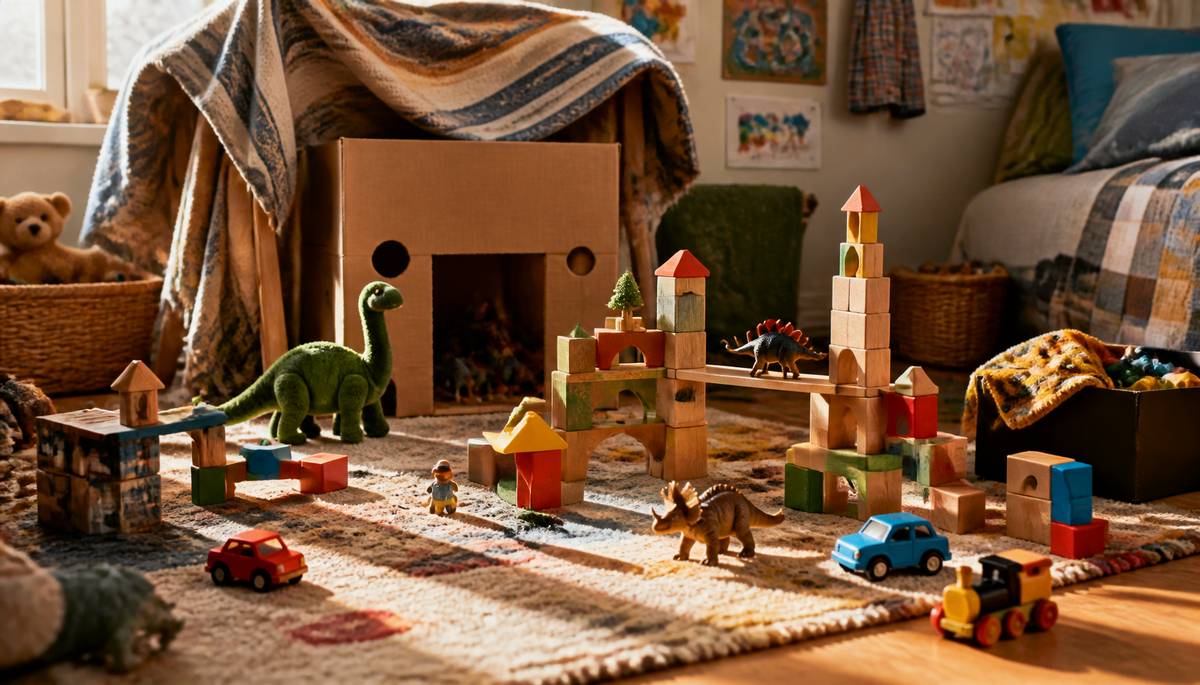 A wooden block has one great advantage over many modern gadgets: it never asks for a password. It also leaves the child to decide what it is. Today, a tower; tomorrow, a bridge, a spaceship or a structure that makes an architect reach for a hard hat.
That freedom matters. With no instructions dictating the outcome, children test ideas, adapt when a wall falls down and turn a few pieces into a whole imagined world. Dolls, toy cars and action figures add characters and plots; a chair, blanket or cardboard box can become the setting. The box, having made no effort at all, may still get the starring role.
Play with others brings a different set of skills. Who gets the red car? Is the figure a villain or merely misunderstood? Children have to explain, listen, bargain and sometimes defend rules they invented moments earlier. Disagreement is part of the play, and working through it gives them practice in resolving conflicts.
Traditional toys can last for years and pass between siblings, while digital toys can offer their own kinds of play. There is no need to choose one camp. A varied mix gives children different ways to explore.
Sometimes the best starting point is a handful of blocks, a toy car and a box. The plot can take care of itself.
Posted on 17 October 2026
Are Smart Toys Quietly Killing Imagination?
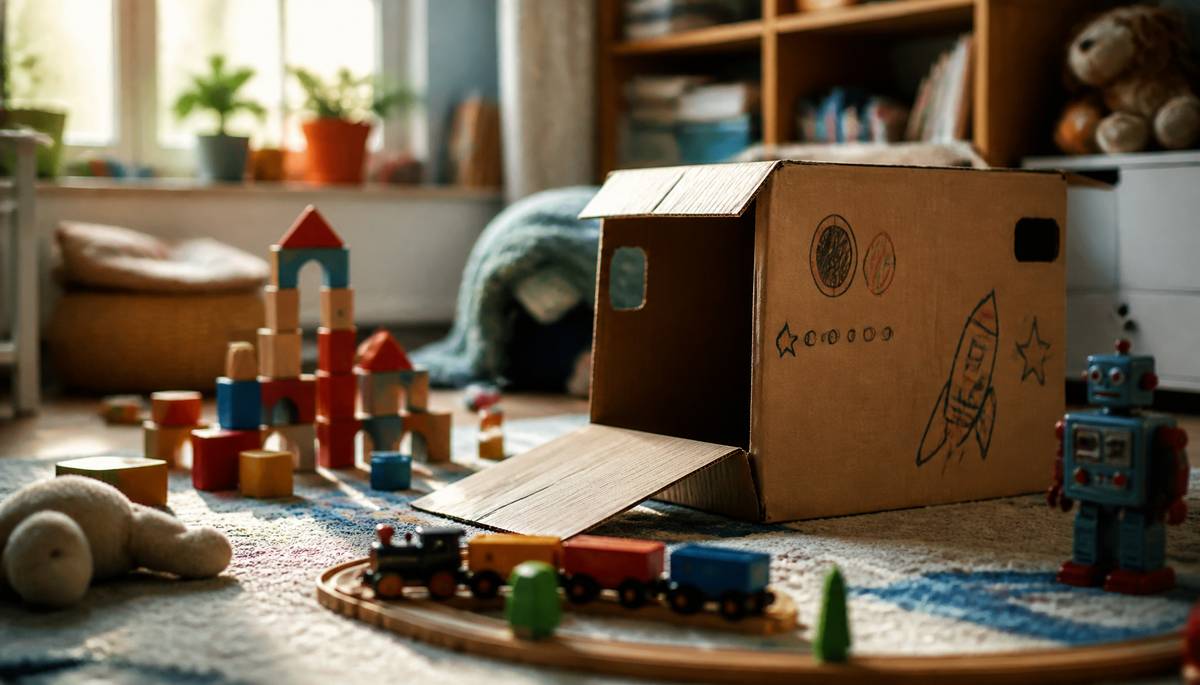 A toy used to arrive half-finished, which was its chief virtue. The child supplied the rest: the voice, the plot, the peril, the rescue, and a fair amount of carpet damage. Now many toys come furnished with opinions, instructions and a reply for everything.
That cleverness is not useless. Talking robots, responsive dolls and electronic learning gadgets can adapt to a child’s answers, introduce new topics and nudge problem-solving along. Used well, they can stir curiosity rather than merely keep a youngster quiet for ten blessed minutes.
Still, there is a quiet cost when the toy does too much of the work. A pile of blocks can be a fort by breakfast and a moon base by tea. A cardboard box asks almost nothing and therefore permits almost anything. By contrast, a toy that supplies the script, sets the task and leads the play leaves less room for invention.
There are plainer concerns as well. Connected toys may collect data, depend on software updates and become expensive ornaments once support is dropped. A wooden train rarely suffers such indignities.
The quarrel is not between technology and imagination. A smart robot may join a grand adventure perfectly well. The real question is simpler: does the toy widen a child’s world, or keep steering it down a narrow lane? The best toys are not the ones with all the answers, but the ones that provoke better questions.
Posted on 13 October 2026
The Best Travel Games Aren't Board Games At All
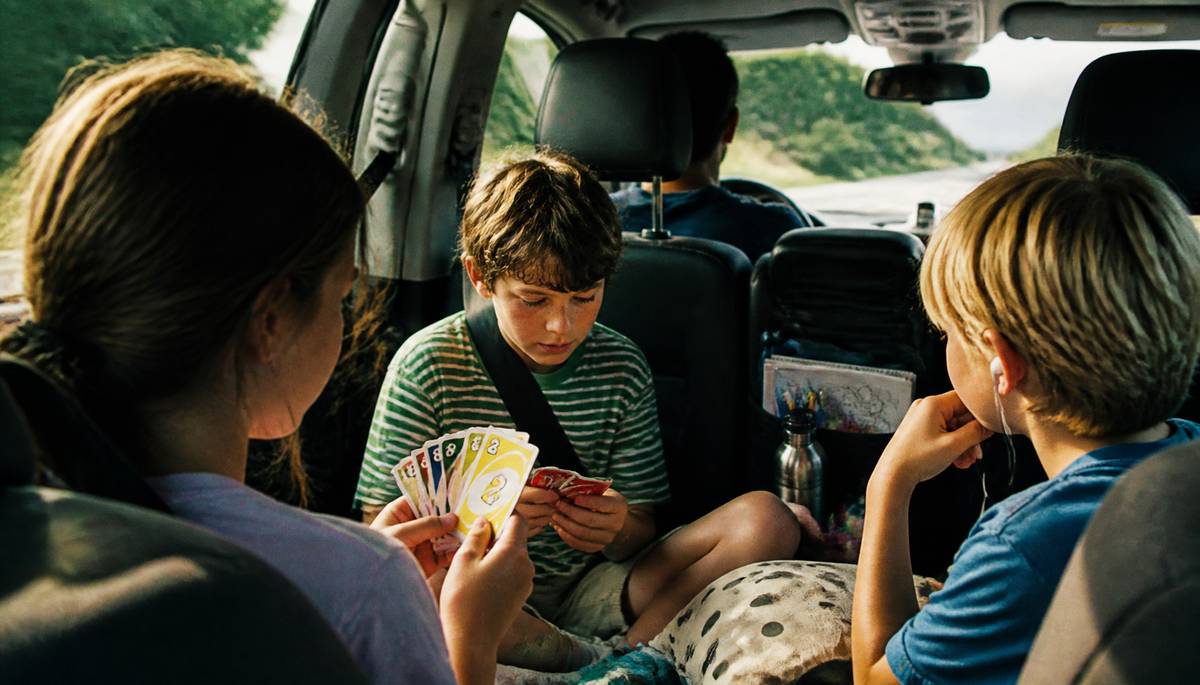 The smartest travel games often don’t come in a box. They fit in a pocket, survive a dropped snack, and don’t scatter across row 18 the moment the plane shudders.
What works on the road is simple: rules a child can grasp fast, but with enough twists to stay interesting after the third round. Long explanations die hard in cramped seats, especially when someone announces they need the toilet just after take-off. The same goes for fiddly sets packed with tiny bits. Small is good. Sixty loose counters are not. Magnetic pieces, cards, dice sealed inside the game, or boards that keep everything contained make far more sense.
Then there’s the battlefield itself. A train table can handle one sort of game; a car journey often cannot. That’s why the best options are sometimes the least physical. Word games, guessing games and verbal challenges need almost nothing, yet they can pull in the whole family.
Age matters too. Children need real choices, not constant adult coaching. If brothers and sisters are different ages, cooperative play can stop every trip turning into a tiny war with disputed rulings.
For longer journeys, variety wins. One thoughtful game, one creative activity, one very easy fallback. And forget “educational” labels if the child hates it. If you’ve still got 300 kilometres to go, enthusiasm beats virtue every time.
Posted on 5 October 2026
How Cooperative Games Let Younger Children Beat The Age Gap
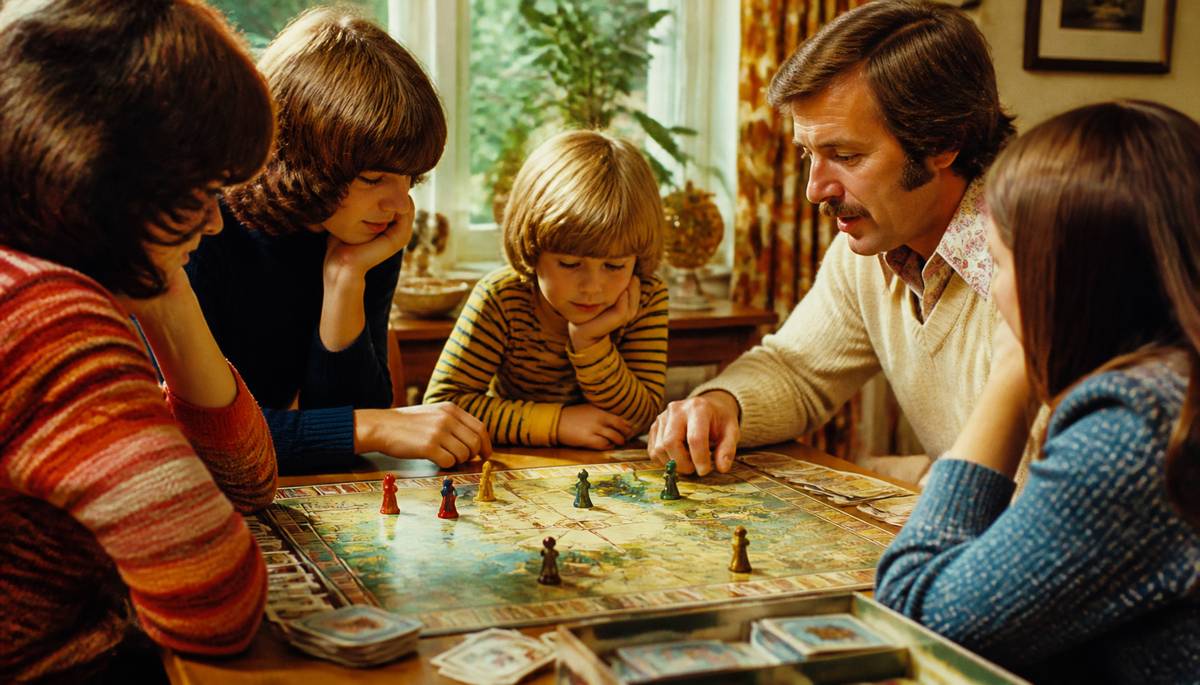 Family play can turn sour when every move is a duel and the youngest child is plainly outmatched. Cooperative games soften that age gap by making the table a fellowship rather than a battlefield.
Instead of trying to crush a sibling, outwit Dad or bankrupt Grandma, everyone faces the game together. The task may be to solve a mystery, flee a danger, overcome a monster or finish before the clock runs down. That small shift changes everything. A younger child, who might struggle in a straight contest, can still spot patterns, remember useful details or notice a clue others miss. Older children and adults can carry more of the planning without taking over the whole adventure.
These games also make talk part of the play. Players suggest, question, explain and choose together. If a plan goes wrong, it is the company that must recover, not one poor soul blamed for the ruin of the evening.
There is still a true sense of contest. The rival is simply the puzzle, the timer or the cardboard dragon having a wretched night of it. Winning together can feel every bit as exciting as a traditional victory.
Competitive games still matter. They teach grit, tactics and how to lose well. But for mixed ages, and for children who find defeat hard to bear, cooperation can bring more joy and far less strife.
Posted on 26 September 2026
The Best "Educational" Games Are The Ones That Never Look Educational
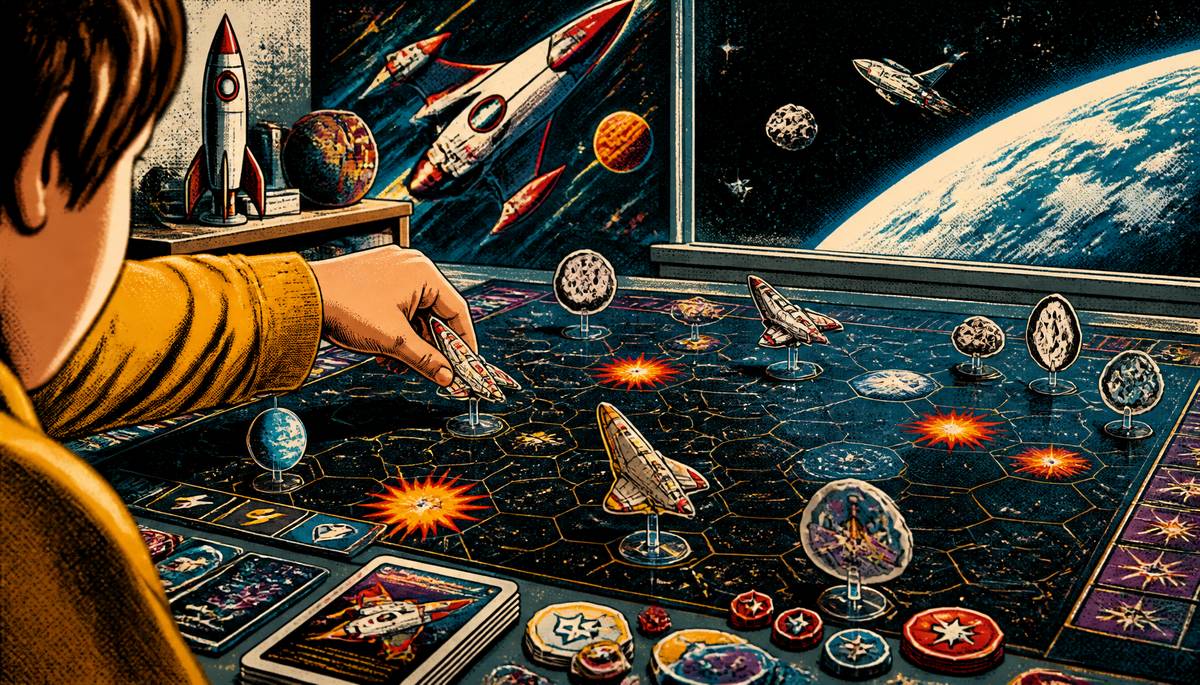 The strongest “educational” games rarely arrive wearing the label. They come disguised as pirate raids, castles under siege, bright little tiles, or a furious scramble to stop someone claiming the last dragon. Children think they are playing to win. Often, they are also learning to think several steps ahead.
That is what many of the best strategy games for children do so well. They keep the rules light, but make the choices matter. A child may have to stretch a small pool of resources, decide between a quick gain and a better reward later, or guess what another player is about to do. Those are serious mental habits, taught quietly.
The lesson lands because the consequences are immediate. Spend everything now, and you may regret it before the round ends. Keep a useful card back, shield one key piece, or set up a move in advance, and the payoff becomes visible within minutes. No lecture required.
Different games sharpen different forms of thought: spatial awareness, memory, probability, cooperation, resource management, reading intent. The trick is not to drain away the real decisions in the name of making things “age-appropriate”.
Children do not need a worksheet to practise planning. They need a reason to care. Spaceships help.
Posted on 21 September 2026
Why You Should Stop Letting Children Win On Purpose
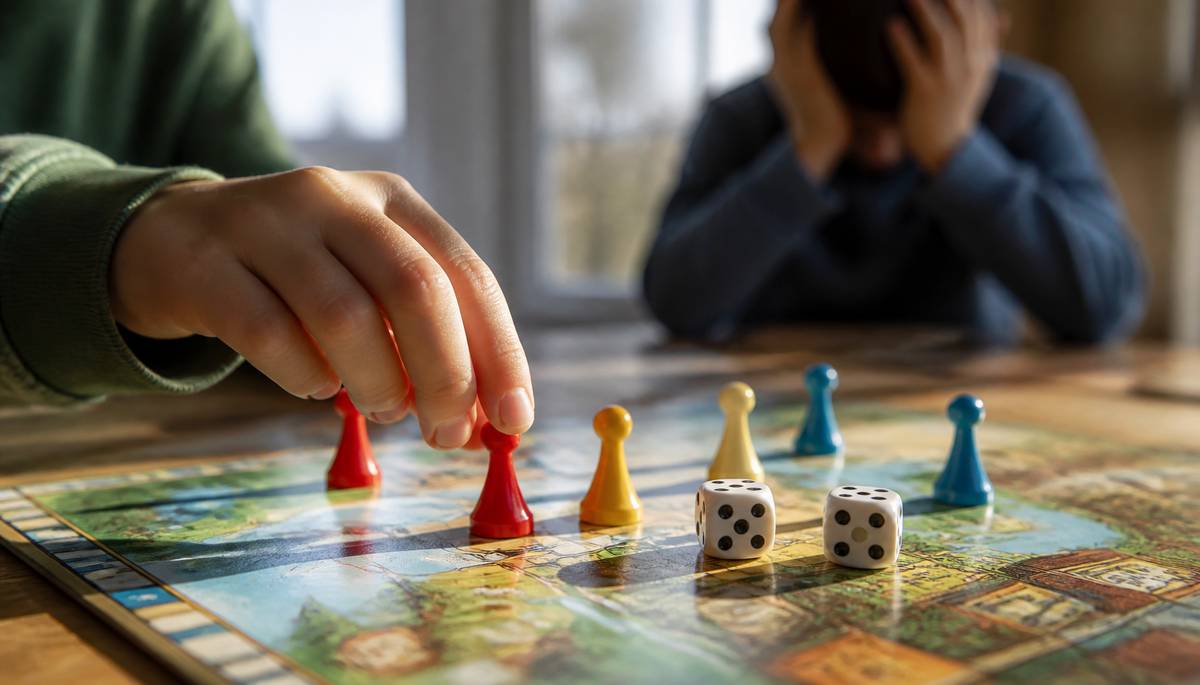 Letting a child win may feel kind. Usually, it is not. A rigged victory teaches the wrong lesson: that success should be softened into their hands, and disappointment avoided like a plague cart at the gate.
Board games offer something better. They give children a small, safe taste of losing, and that matters. A child can spend twenty minutes building what looks like certain triumph, only to watch a late roll or one unlucky card bring it all crashing down. Hard? Yes. Harmful? No. That is how frustration becomes manageable instead of monstrous.
Different games teach different truths. Games of chance show that defeat is not always anyone’s fault. Strategy games reveal that choices carry consequences. Cooperative games add another lesson entirely: sometimes everyone rises together, and sometimes everyone falls together.
There is more being learned than grace in defeat. Children practise waiting their turn, sticking to the rules, and accepting that another player may get exactly the card they wanted. Civilised behaviour, in miniature.
Adults set the tone. Praise the winner. Keep celebrations from turning into gloating. Most of all, resist the urge to arrange a sentimental little triumph for the youngest player. Children do not need to enjoy losing. Most grown-ups do not. They need to learn that disappointment passes, the world does not end, and tomorrow brings another game.
Posted on 16 September 2026
Collecting Is Easy-World-Building Is Where The Magic Starts
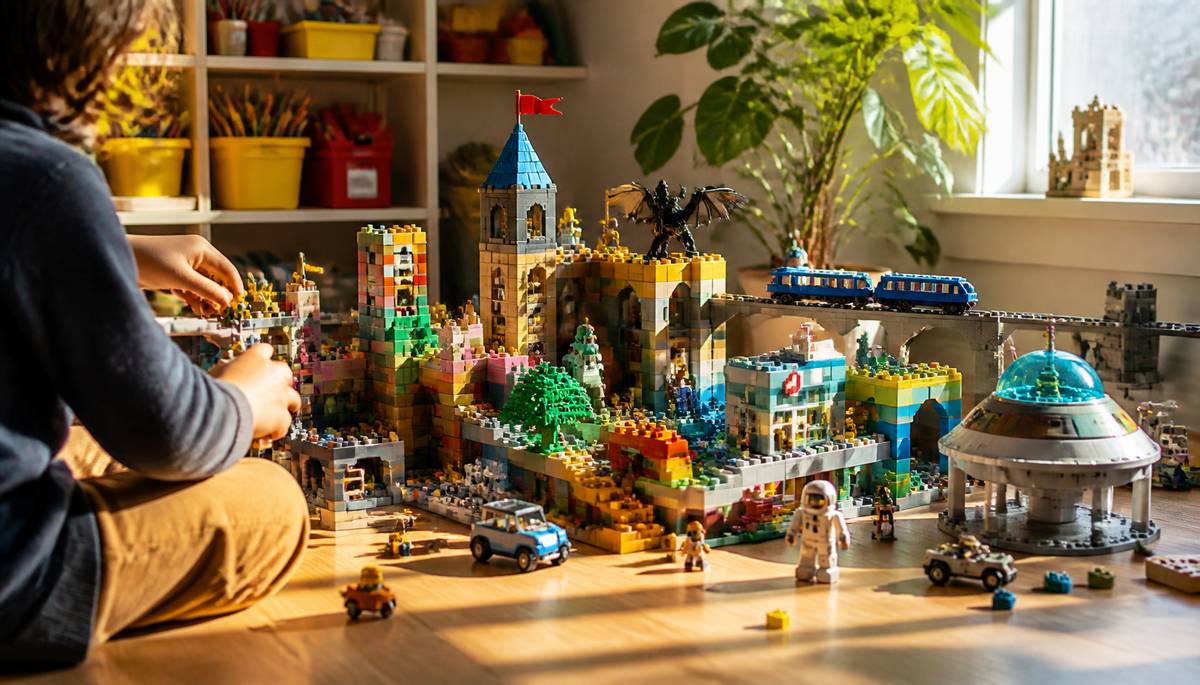 Toy companies love the collector itch: one more figure, one more vehicle, one more “special edition” that is basically the old one with a new haircut. Fine. Collecting has its pleasures. But the real spark starts when a toy stops acting like a finished universe and starts behaving like loose parts for the mind.
That is why open-ended toys endure. Blocks, magnetic tiles, dolls, mini figures, craft supplies and construction sets do not tell children exactly what they are for. A pile of bricks can be a fortress on Tuesday, a train station on Wednesday and some slightly alarming moon base by the weekend. The point is not the object. It is the decision-making.
That freedom matters. With no single correct result, children test ideas, change plans and sort out problems themselves. Educational bodies and research regularly link this sort of play with creativity, language skills, teamwork and resilience. That sounds lofty, but it often looks gloriously chaotic: two children arguing over zoning laws for a dragon near a hospital.
And that is world-building. Children invent rules, relationships and stories, then rewrite them as the play shifts. Not every toy needs a worthy lesson attached. Sometimes fun is enough. Still, toys with gaps built into them often last longer, because the manufacturer provides the bits.
The child provides the cosmos.
Posted on 9 September 2026
How Stored-Away Toys Become Exciting Again
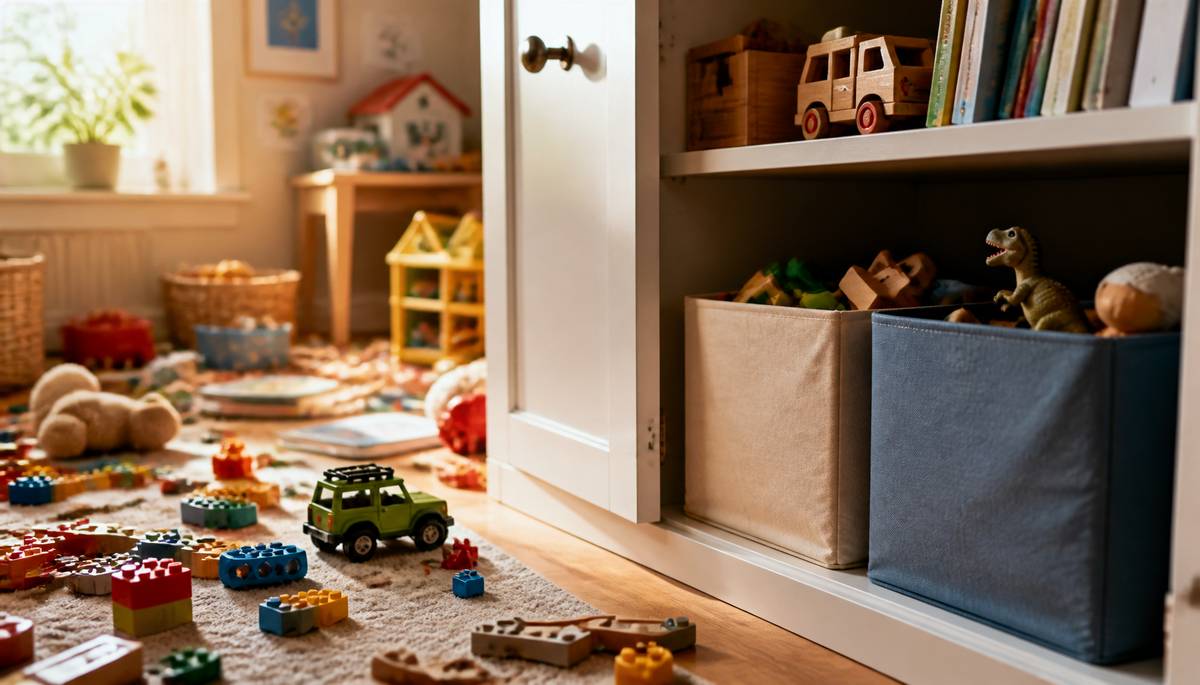 A child surrounded by every toy he owns is not always rich in play; he may simply be crowded out by choice. Put too much before him at once, and even delight can become a kind of fog.
That is why storing some toys away for a time often works so well. The method is plain enough: divide toys into a few groups, leave one selection out, and tuck the rest into cupboards, boxes or another storage spot. After a few weeks, swap them over. What vanished returns; what was familiar slips from sight for a while.
The first gain is practical. A room with fewer toys is easier to tidy, easier to see, and far less likely to become a jumble of bricks, crayons, dolls and one-legged dinosaurs. But the more interesting gain is this: absence sharpens affection. A toy neglected for months may recover its charm merely by being unavailable.
This can also ease the pressure to keep buying something new. Very often, the child did not need more toys; he needed fewer at one time.
A sensible rotation includes variety: perhaps something to build, something to imagine with, something to make, a puzzle, and a few books. No strict schedule is required. Beloved favourites can stay out. The aim is not severity, but clarity. Fewer choices can mean deeper play. Posted on 4 September 2026
Child-Height Storage Is The Tiny Design Rule That Changes Everything
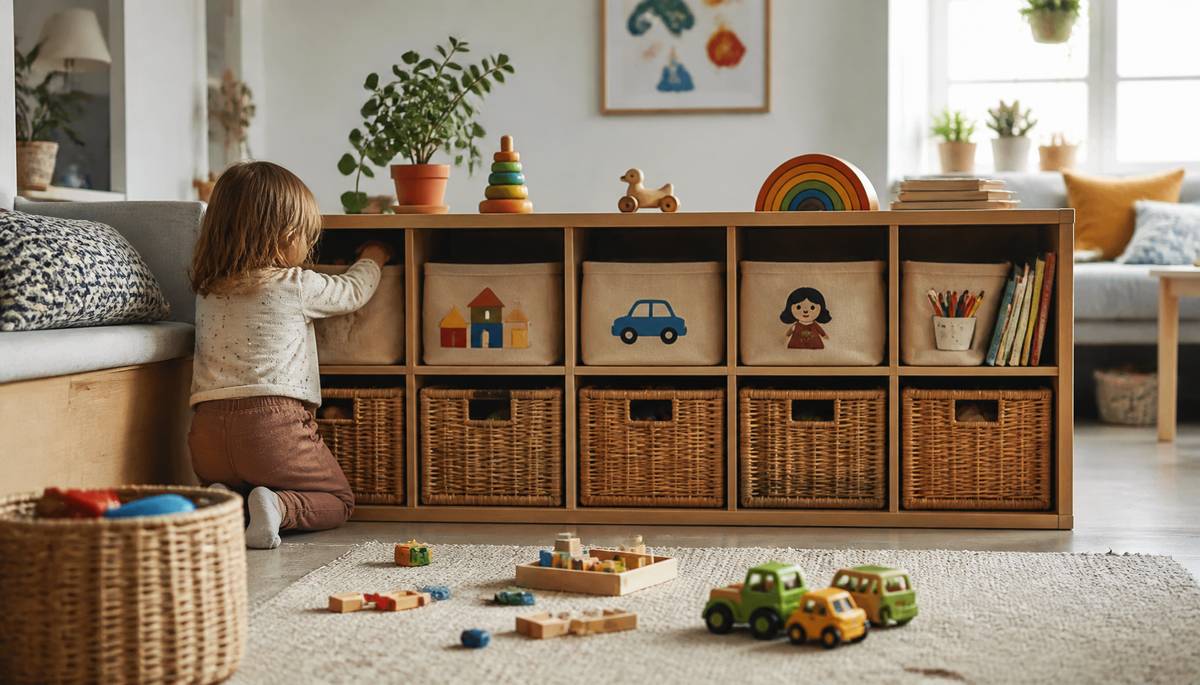 Toy storage fails for one simple reason: adults design it for adults. A beautiful unit with deep lids, lofty shelves or fiddly sorting rules may look tidy in a shop, but a child will ignore it by tea time.
The rule that changes everything is height. Put storage where children can actually reach it and tidying becomes possible without constant help. Low shelves, open baskets and light bins work best because toys can be dropped in quickly, not packed away like museum pieces.
Keep categories broad. Building toys in one container, vehicles in another, dolls, art bits and dressing-up clothes each with their own home. Small children often respond better to pictures than written labels, so a photo or simple image can do more than a word.
Think about traffic as well. The toys used every day should live in the easiest spots. Less popular games, puzzles and seasonal things can go higher up or behind cupboard doors. That keeps the room calmer without making anything vanish entirely.
Furniture should earn its keep. A low shelving unit can separate a play space and still hold books, bricks and crayons. A bench with storage underneath gives you a seat and a hiding place for the dinosaur herd.
Perfection is not the aim. A system a child can manage alone is.
Posted on 29 August 2026
How Infinite Lives Turned Spectrum Kids Into Accidental Programmers
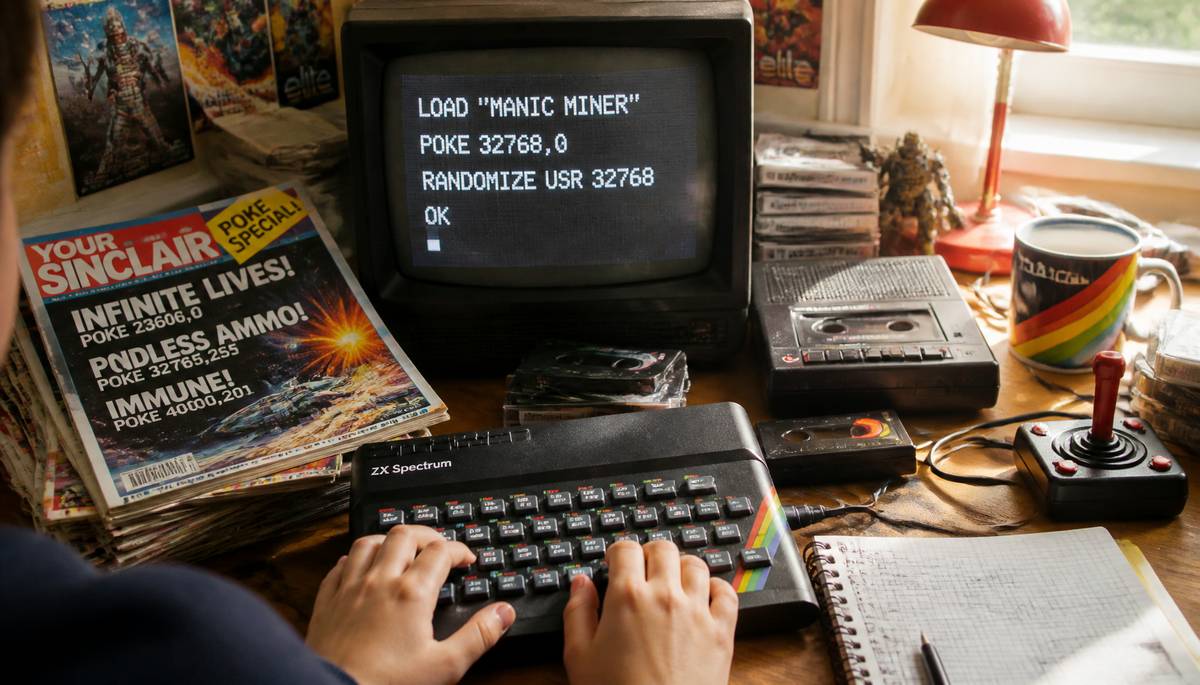 The ZX Spectrum did something marvellous to a generation of children: it lured them in with games, then quietly taught them to meddle.
One of the great gateways was the POKE. Magazines printed these odd little spells alongside promises of infinite lives, endless ammunition or immunity from the next alien, robot or badly animated hazard. You would load the game, break in at the right moment, type something like `POKE 32768,0`, and hope your fingers had behaved themselves.
What you were really doing was altering a value in memory. Somewhere in that modest 48K lived the number of lives left, the amount of ammo, or the instruction that decided a collision meant death rather than a lucky escape. You did not need to understand Z80 machine code to grasp the thrilling idea that software was not sacred. It could be prodded.
That mattered. A child might start out wanting to cheat at Manic Miner or Jet Set Willy and end up writing bits of BASIC, inspecting memory and asking the dangerous question: what happens if I change this?
Sometimes the reward was glorious invincibility. Sometimes the screen exploded into nonsense and the Spectrum fell over completely. Even then, the lesson stuck. Computers were not sealed boxes. They were things you could tamper with, learn from and, by accident or design, begin to program.
Posted on 18 August 2026
Why Are The Best Kids' Tech Toys Suddenly Screen-Free?
 The cleverest kids’ tech toys have started doing a funny little sidestep away from tablets and towards touch, movement and making. Quite right too. A screen can show a child a piano; an Orbita MIDI sequencer lets them build music with spinning rings and coloured magnets, then plug into a phone or computer only when the sounds need escaping.
That’s the pattern. Tech is still there, but it’s hiding in the walls like a polite ghost. Lego’s Smart Play Pokémon sets pack sensors, lights, a speaker, motion detection and NFC-triggered interactions into a rechargeable brick, yet the whole trick works without a screen nagging for attention. Kibu’s 3D-printed headphones turn listening into a build-it-yourself STEM job, with repairable parts and an 85 dB volume cap. Even the Loog x Gibson mini guitars are proper instruments, not plasticky pretendy-wendies.
The best of the bunch also gets children off their bottoms. Stapelstein’s recyclable stacking pieces become balance courses, forts or wobble games; Modu’s 17-piece balance track does similar with beams and foam blocks; Woom’s self-balancing bike starts as young as 9 months. Brains and bodies, both invited.
Screen-free suddenly looks less like nostalgia and more like good design. Kids don’t always need another glowing rectangle. Sometimes they need a dance mat, a wooden puzzle, a dinosaur watch, and a gadget that remembers it has hands. Posted on 25 July 2026
Why Did 1980s Kids Grow Up So Wild And Unsupervised?
 Eighties kids were often left to roam because childhood then was built around absence: no mobiles, no internet, patchy supervision, and a broad social shrug about risk. You went out, your parents vaguely knew a direction, and that was that. Home by tea. Or dark. Preferably both.
Adults were busy, distracted or simply less watchful by modern standards. Many mums smoked, many dads were elsewhere or emotionally locked in, and smacking was still treated as normal. Children got handed down clothes, got sent to the post office, got dragged to building sites if childcare fell through, and got on with it. The culture expected toughness early.
The world itself was rougher round the edges. Streets were dirtier, dog mess was everywhere, and schools could be harsh. Pubs were full, smoking happened indoors, and teenagers slipped into boozers years before they should have. Football was huge for some families, especially boys: first matches were rites of passage, all fences, terraces, chants and fearsome toilets. Hooliganism and stadium disasters also formed part of the backdrop.
At home, children orbited brown carpets, gas fires, bulky tellies and just three or four channels. Miss a programme and it vanished into the dark. So kids made their own entertainment: street football, bikes, wandering, music, mischief. Wild, yes. But also ordinary. Neglect and freedom were often the very same thing, wearing different shell suits. Posted on 6 July 2026
Beach Toys That Buy You Actual Time to Sit Down
 Beach days with children are basically a hostage negotiation conducted in sand. The payoff for adults—reading, tanning, briefly pretending to be horizontal in peace—depends on bringing gear that keeps small humans occupied.
The standout picks span baby-simple to teen-chaotic. For toddlers, a $7 Nuby watering can and Hape’s $19 essential set work because they’re easy to carry and durable; the same goes for Green Toys’ $17 dumper truck and $28 sand-play set. Hape’s $22 construction kit adds a cone, two diggers, and a sign, which is absurdly thrilling if you are under 6 and deeply committed to infrastructure.
Preschoolers get more ambitious: Kaplan’s $34 textured sand rollers make patterns; Melissa & Doug’s $18 sand-baking set fuels elaborate pretend recipes; a $29 ice-cream set became an all-day obsession, right down to sand sundaes on people’s legs. A $27 unicorn set includes a steamroller that leaves tracks.
For beachcombing, a $19 retractable fishing net is useful for crabs, seaweed, and moats. A $20 catch-and-release aquarium suits kids who want to inspect sand crabs before letting them go. The $24 wave-powered Surfer Dudes toy can help hesitant kids warm up to surf.
Older kids and adults get long-handled $30 shovels, a $60 rope-handle tub hack for hauling toys and storing water, plus $20 water blasters, $35 SlingBall, $12 Hydro Lacrosse, $20 paddleball, $5 Velcro catch, $75 Spikeball, a $12 Nerf football, $13 pocket kites, and a $30 full-face snorkel mask discounted to $35 from $40. Posted on 3 July 2026
Blade, Loki, and Deadpool Turn Up for Marvel Tōkon: Fighting Souls
Arc Systems Works used Evo 2026 to show off the sort of line-up that suggests somebody in the office simply pinned names to a dartboard and was delighted with the result. Marvel Tōkon: Fighting Souls is adding Blade, Loki, and Deadpool to its tag-fighter roster, giving the game a hero, a villain, and one professional nuisance.Blade fights as you’d hope: Muramasa sword first, with guns and throwing knives handling the awkward business of anyone keeping their distance. Loki arrives with a flaming sword, a staff resembling the one that carried the Mind Stone in The Avengers, and the usual implication that fair play is for other people. His reveal also introduced an Asgard stage, all grand menace and likely no parking.
Deadpool appears pitched in the same unruly spirit as Marvel vs. Capcom 3, with a move set stuffed with jokes, fighting-game nods, and his own version of Mortal Kombat’s Toasty. Nolan North is back voicing him, reprising the role he played in Deadpool’s 2013 game.
In the story mode, those three join the previously announced Ghost Rider as the Samurai Outriders. They’ll face several opposing squads: the Fighting Avengers of Captain America, Iron Man, Hulk, and Black Panther; the Knights of Doom with Doctor Doom, Magneto, Carnage, and Green Goblin; the Unbreakable X-Men of Wolverine, Magik, Storm, and Danger; and the Amazing Guardians led by Spider-Man, Star-Lord, Ms. Marvel, and Peni Parker.
Posted on 30 June 2026
Bungie After Destiny: Half the Shop Gone, Marathon Left Carrying the Weight
 Bungie’s in the grinder again, only this time it feels less like a stumble and more like the hoose lights coming on after a long, deluded rave. With Destiny 2 now effectively at end of service after its final content update, the studio has begun major layoffs that had been feared for months. The internal target previously discussed was roughly half the company, somewhere in the 40% to 55% range, meaning several hundred jobs.
The reason is brutally plain: Bungie says Destiny 2 underperformed for years, and with future projects still stuck in early incubation, it could no longer sustain its old size. Right now, Marathon is the only game in active development. Nothing else has been greenlit.
Much of the Destiny team appears to be gone. Some developers had already been shifted to Marathon, while others were left with barely any work after Monument of Triumph beyond a few hotfixes. Cuts have also hit some Marathon staff and some PlayStation support employees attached to Bungie.
That leaves a reduced studio trying to survive on Marathon, an extraction shooter that launched below expectations and has continued losing players, even as Bungie pushes harder, including a planned dedicated PvE mode.
Sony bought Bungie for $3.6 billion and has already taken $700 million in impairment losses, implying a remaining value of $2.9 billion. On days like this, that number looks awfy theoretical. Posted on 26 June 2026
GTA 6 Sets the New Price Floor at $80
 After years of speculative math and forum-theology about what, exactly, the largest commercial entertainment object on earth gets to charge, Rockstar has made it official: Grand Theft Auto 6 will cost $80 in its standard edition, a clean $10 step above the now-normal $70 AAA tier. The Ultimate Edition lands at $100.
Preorders open at midnight local time on Thursday, June 25. Buyers can preload beginning Nov. 12, one week before the Nov. 19 release. There is no early-access carveout; everyone starts at launch.
The game is being framed, at least at release, as a single-player product set in the series’ biggest and most immersive iteration yet, which strongly suggests no new GTA Online mode will accompany day one, much as GTA 5 initially arrived without its eventual online counterpart.
Anyone who preorders and purchases before Nov. 20 gets the Vintage Vice City Pack, an ’80s-themed bonus tied to the Tommy Vercetti era.
The more culturally revealing wrinkle is the Ultimate Edition’s exclusive vendors: a car mod shop, tattoo parlor, clothing store and salon, plus extra gear, vehicles and cosmetics. Players can still alter hair, cars and tattoos elsewhere; what appears gated is a distinct inventory.
The larger industry question is obvious. GTA 6 becomes only the second major game to set a standard edition at $80 after Mario Kart World. Others tested that number, then retreated. Rockstar, predictably, did not. Posted on 25 June 2026
Final Fantasy VII Revelation Set to Close the Remake Trilogy in 2027
 Square Enix has named the last movement of its remake project: Final Fantasy VII Revelation, the closing chapter of the Final Fantasy VII Remake trilogy.
The reveal came during Summer Game Fest 2026, with launch planned for Autumn 2027 on PlayStation 5, Nintendo Switch 2, Xbox Series X|S, and PC. Its timing marks 30 years since the original Final Fantasy VII first entered the world.
Revelation begins after Rebirth. Cloud and the others travel the planet aboard the Highwind while Sephiroth nears godhood and Meteor hangs over everything as a sentence waiting to be carried out.
This final entry opens the world in a new way. Players will be able to pilot the airship across the full planet, drop into locations by parachute, and move smoothly from sky to ground without interruption. Vincent Valentine and Cid Highwind also become fully playable for the first time in the trilogy, each added to the series’ blend of real-time action and tactical combat with distinct abilities and styles.
The gameplay presentation showed the return of Wutai, Mideel, and the Northern Continent. It also introduced the FITS system, which lets characters wear outfits modeled on classic Final Fantasy jobs like Black Mage and Warrior, unlocking different abilities and movesets.
The game’s central idea is resolve: Cloud and his companions testing what they believe as they move toward a final battle for the planet’s future.
Posted on 24 June 2026
Minecraft Dungeons II Tries Something Rare: An ARPG for Almost Everyone
 Action RPGs often become a sort of administrative afterlife: spreadsheets in wizard hats. Minecraft Dungeons II appears to understand that many players would rather get on with the joyful business of thumping monsters, hoovering up loot, and doing it with friends.
The sequel keeps the classless design of the first game, letting builds emerge through equipment, but expands the toolbox. Alongside melee and ranged weapons and three artifact slots, there are now four armor slots and three talisman slots for passive effects. In one demo build, a bone talisman summoned a dog companion that fought, drew enemy attention, and returned shortly after being defeated. That paired neatly with a weapon enchantment that occasionally created healing patches after kills.
Its biggest structural change is the move from isolated mission selection to an interconnected Overworld dotted with dungeons. A jump button, almost absurdly modest as innovations go, helps the world feel more physical and worth exploring.
A cave demo descended through slimes, skeletons, spiders, and illagers before ending in a boss battle against the Twisted Warden, a larger and nastier spin on Minecraft’s Warden. Visually, dynamic lighting does much of the heavy lifting, from shifting woodland sunlight to torchlit caverns and sculk glow.
Local co-op, online play, and matchmaking are all supported. Minecraft Dungeons II launches September 29 for Xbox Series X|S, Xbox on PC, cloud, Steam, PlayStation 5, Nintendo Switch, and Nintendo Switch 2, with Game Pass and Xbox Play Anywhere support. Posted on 23 June 2026
Shift Up’s Stellar Blade: Blood Rain Arrives Early, Loud, and Very Self-Aware
 Summer Game Fest Live coughed up an unexpectedly early look at what Shift Up is doing after Stellar Blade, and the answer is Stellar Blade: Blood Rain.
The follow-up appears to keep the first game’s turbocharged action intact while swapping some of its combat flavor. The reveal trailer centers on a new protagonist roaming a bleak cyberpunk setting and dismantling grotesque monsters in fights that look fast, glossy, and aggressively theatrical. Where Stellar Blade leaned on swords for both attack and defense, Blood Rain seems to push harder into close-quarters brawling, with the new lead throwing punches as often as blades. The trailer also includes a very deliberate bit of spectacle: she removes her jacket, giving the game an unmistakably gratuitous jiggle-physics showcase.
Shift Up says Blood Rain is still in early development, so this is more mood board than imminent launch plan. One concrete change is how the game will reach players. The original Stellar Blade launched as a PS5 exclusive under Sony, but Blood Rain will not be published by Sony. Instead, Shift Up says it is moving to a first-party service model, with the goal of handling marketing in a way that more fully reflects the distinct identity of the Stellar Blade IP and communicates the universe’s appeal more directly.
Posted on 22 June 2026
GTA 6 Gets Cover Art Reveal and Pre-Order Date as November Launch Holds
 For fans of prolonged anticipation, Grand Theft Auto VI remains the glittering neon prize at the end of Rockstar Games’ very expensive tunnel. The studio has already issued two teasers and, after pushing the launch back to later this year, has now delivered the sort of update that sends the internet into a mild hormonal event: official cover art and pre-order timing.
The newly revealed artwork leans hard into the series’ familiar collage style, packing in characters alongside an assortment of vehicles. There are cars, motorcycles, boats, and helicopters, all arranged under a purple-heavy palette clearly tuned to the Vice City mood. In other words, it looks exactly like the kind of cover designed to say chaos, but tastefully.
Rockstar also set June 25th as the date when pre-orders open for PS5 and Xbox Series X/S. For a game this anticipated, that is less a sales window than a starting gun.
The release itself is still scheduled for November 19th, including the online launch. So, after months of trailers, delays, and fan speculation intense enough to power a small city, the calendar for GTA 6 is at least becoming real.
Posted on 19 June 2026
The Duskbloods Looks Sharper, and Its Summer Network Test May Be the Real News
 FromSoftware’s The Duskbloods has surfaced with a fresh trailer and, more usefully, confirmation of a closed network test this Summer. That is not just a ceremonial bit of pre-launch theatre. A Soulsborne-style game lives or dies by the peculiar tension of its online systems, and Nintendo’s network architecture has its own habits and little eccentric coughs. Better to prod the machinery now than discover at launch that it wheezes under pressure.
The footage also suggests the game has benefited from that most magical phase in development: the final scrub, polish, and optimization pass, when a promising object stops looking like a collection of ideas and starts resembling an actual finished thing. It simply appears in better shape than it did in earlier trailers.
There is still no precise release date, but the plan remains to launch this year. For the Switch 2, that matters. A dedicated Soulsborne game would give the system a rather important bit of identity, and The Duskbloods does not seem to be aiming modestly. It is built around 8-player multiplayer, which is no small undertaking on any platform, let alone one with a fresh online setup to prove.
Players take the role of the Bloodsworn, vampire-like fighters equipped with distinct abilities and weapon sets, firearms included. Inevitably, that brings Bloodborne to mind.
Posted on 16 June 2026
Metro 2039 Turns Betrayal Into Survival Horror
 Metro 2039’s new trailer arrives like a panic attack in excellent lighting: three minutes of grime, dread, and the kind of tight-corridor stress that makes fresh air feel like downloadable content.
The footage leans hard into the series’ signature mix of stealth-action and survival, with cramped underground encounters, dangerous surface runs, and the familiar Metro staples of scavenging, tension, and diegetic mechanics that keep every bullet and breath feeling personal. It also introduces a new stealth weapon, the Shatun, plus a breaching charge that adds a louder, more forceful option to the arsenal as players push deeper into the Metro’s darkest reaches.
At the center of the story is The Stranger, a protagonist running on fury and apparently very little patience. His target is Hunter, the once-revered Spartan leader who now rules a transformed Metro under a powerful new regime. Hunter had been a legendary Ranger within the Spartan Order, a veteran sworn to defend the tunnels and the people inside them.
That legacy is now wreckage. The Spartan Order The Stranger believed in has effectively collapsed, and the protectors he once looked up to have, in his view, become the thing they were meant to stop. METRO 2039 frames that betrayal as its emotional engine, with The Stranger determined not to stop until the Fuhrer burns.
Posted on 12 June 2026
Nintendo Returns to Ocarina of Time, but Keeps Its Secrets
 Nintendo has chosen, with almost theatrical timing, to revive one of its grandest reliquaries. During its latest Direct, the company confirmed that The Legend of Zelda: Ocarina of Time is being remade for Nintendo Switch 2, with release promised before the end of 2026.
The announcement was notable less for what it showed than for what it withheld. The trailer offered chiefly a tapestry-style retelling of the story, with only a fleeting glimpse of Young Link asleep, stirring, and bearing the Triforce on his hand. As evidence of the game itself, it was scarcely more substantial than a dream.
Still, the schedule suggests the project is not distant. Nintendo has lately adopted the habit of unveiling games shortly before launch; the newest Star Fox was announced on May 6 and arrives June 25. Ocarina of Time has no date yet, but October seems a plausible outer limit, especially as publishers try to keep clear of Grand Theft Auto 6. If any company can risk the comparison, Nintendo probably can.
The game first appeared in 1998, nearly 30 years ago. Since then it has resurfaced on GameCube using lifted N64 code, in the 2011 3DS edition Ocarina of Time 3D, and later on Wii Virtual Console and Nintendo Switch Online. This remake is plainly the largest overhaul yet.
Excitement is real, but so is impatience. With Switch 2 selling briskly, many still complain the system lacks undeniable software, and for some, even a revered classic from decades past does not quite settle the matter.
Posted on 11 June 2026
Persona 6 Emerges at Last, Bound for Game Pass
 After a decade’s wait since Persona 5, Atlus has finally lifted the veil on Persona 6. The reveal arrived during the Xbox Showcase livestream: brief, spectral images, what appeared to be a graveyard, and little else. No release date was offered.
What is certain is where the game will appear. Persona 6 is planned for PC, PlayStation 5, and Xbox Series X/S, and it will be available on Xbox Game Pass at launch.
Recent leaks had already pointed toward the game’s logo and main cast, and the teaser confirmed the logo’s authenticity. The new entry is positioned as a standalone story, meant both for longtime players and newcomers, continuing the series’ familiar design: ordinary life on one side, supernatural danger on the other.
Its store page describes a modern-day Japan where school routines, friendships, romance, and memory-building sit beside urban legends, occult disturbances, and hidden darkness. As before, players will awaken Persona powers, draw strength from relationships, and turn those bonds into weapons against what waits beneath the surface.
Before Persona 6 arrives, Atlus has another return planned. Persona 4 Revival is due in February 2027 and will also launch on Xbox Game Pass.
P-Studio director Kazuhisa Wada said the team is now officially at work on Persona 6, with release planned after Persona 4 Revival. Posted on 8 June 2026
toylistings.org (c)2009 - 2026