Designing Meaningful Keepsakes That Actually Get Kept
 A keepsake earns its place the hard way. It survives drawer clear-outs, house moves, ruthless January decluttering, and at least one moment when somebody holds it up and says, “Do we really need this?” The pieces that make it through are rarely the flashiest. They are the ones that mean something specific, do something useful, or hold a story too personal to be replaced by a generic “Live, Laugh, Love” plaque bought in a panic.
That is the quiet rule behind every keepsake worth keeping: sentiment alone is not always enough. People like to imagine emotional value works like magic dust. Sprinkle it over any object and suddenly it becomes sacred. In reality, many sentimental items are kept for a year, maybe two, then quietly migrate into a box with old cables and a mystery key no one can identify. If an object is going to last, it needs more than good intentions.
Emotional relevance beats expensive materials
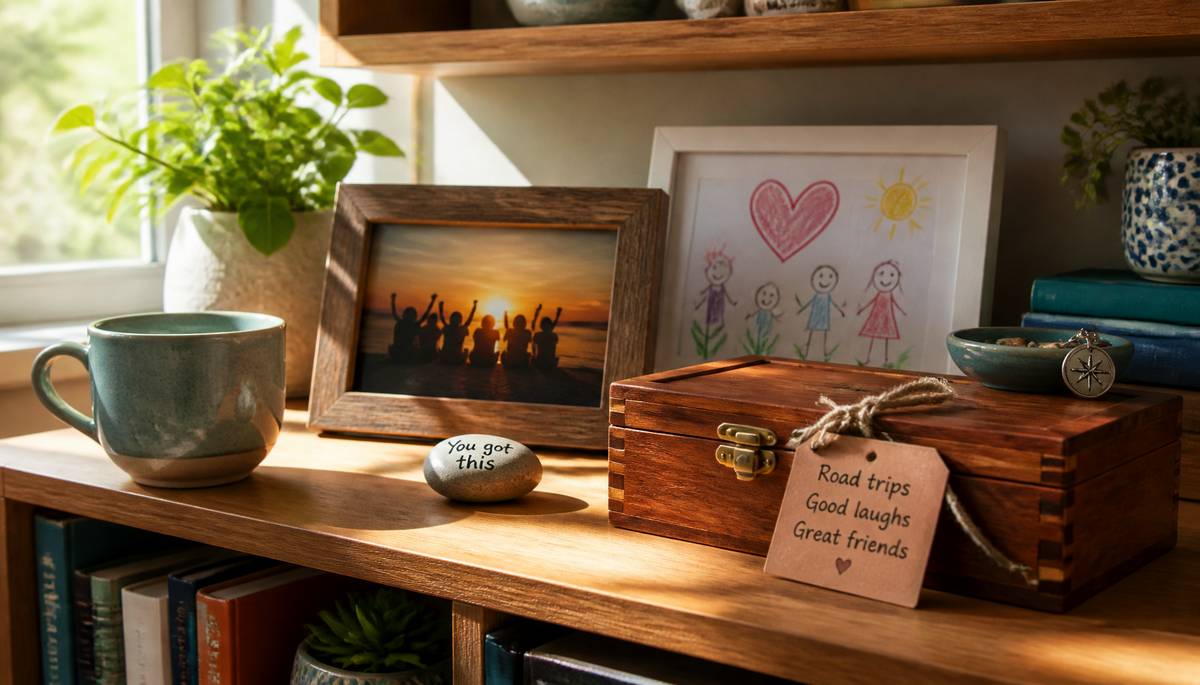
A meaningful keepsake does not have to be grand, luxurious, or handcrafted by someone wearing a linen apron in a sunlit studio. It has to connect to a real memory. That memory should be immediate and clear, not vague and outsourced. The strongest keepsakes point to a particular person, moment, or relationship. A child’s drawing kept because it captures a family joke will often outlast a polished ornament with no personal link at all.
This is why the best keepsakes tend to feel oddly specific. They reflect private language, familiar details, and small truths that only matter inside a certain circle. Specificity is what saves an object from becoming decorative filler. It tells the owner, “This belongs to your life,” not “This could have been given to anyone with a birthday.”
Useful objects have a better survival rate
Practicality helps sentiment stick. If a keepsake can be used, displayed naturally, or folded into everyday life, it has a far better chance of escaping the dreaded memory box. A beautiful object that also serves a purpose does not need to beg for space. It simply stays in circulation.
That does not mean every keepsake should double as office equipment. It just means objects with a role tend to remain visible, and visibility matters. People keep what they encounter. They forget what disappears into storage. A keepsake tucked away “for safekeeping” often enters the witness protection program and is never seen again.
The most lasting pieces are not trying to impress a future antiques dealer. They are designed to matter in ordinary life, where memory is strongest because it is lived with, not archived.
Story turns objects into anchors
Objects without stories are just well-behaved clutter. They sit politely, gather dust, and wait for someone to question their existence. Add a clear story, and suddenly the same object becomes an anchor for memory. It is no longer just a thing; it is a shortcut back to a moment, a person, or a version of life that still matters.
A strong keepsake carries its context with it. You do not need a long explanation every time you see it, but you should be able to recall why it exists without hesitation. If an item requires a five-minute backstory that even you struggle to remember, it is already on thin ice. The best keepsakes have stories that feel immediate, almost automatic, like finishing a sentence you have said many times before.
There is also something to be said for objects that invite retelling. When a keepsake sparks conversation, it stays alive. When it sits silently, hoping someone will notice it, the odds are less promising.
Restraint makes things feel special
Not everything needs to be preserved. In fact, trying to turn every meaningful moment into a physical object is one of the fastest ways to make none of them feel special. When everything is important, nothing stands out, and the result is a shelf full of “very meaningful” items that no one can quite justify keeping.
Choosing fewer keepsakes creates contrast. It allows each one to carry weight without competing for attention. It also makes decision-making easier later on, when space becomes limited and patience for sorting declines dramatically.
A simple way to approach this is to ask a slightly uncomfortable question: would this still matter if it were the only item from this time or person? If the answer is no, it may not deserve permanent residency.
- Choose items tied to a specific memory, not a general feeling
- Favor objects that can be used or displayed naturally
- Make sure the story is easy to recall without effort
- Limit quantity so each piece retains significance
Built to last, not just to impress
Durability matters, though not always in the obvious way. A keepsake should be able to survive time physically, but also emotionally. Trends fade. Styles shift. What felt charming in one phase of life can feel oddly out of place later on.
This is where simplicity often wins. Objects that avoid chasing trends tend to age more gracefully. They do not rely on being fashionable to justify their presence. Instead, they lean on meaning, which has a much longer shelf life.
It is also worth considering how an item will look and feel years from now. Not in a dramatic, future-gazing way, but in a practical sense. Will it still make sense in a different home, a different routine, a different version of life? Keepsakes that adapt tend to stay. The rest slowly drift toward that box everyone swears they will sort through “soon.”
Keep sake and carry on
Designing a keepsake is less about creating something impressive and more about creating something that refuses to be forgotten. The objects that last are not competing for attention; they quietly earn it over time. They show up in daily life, hold onto their stories, and continue to feel relevant long after the moment that created them has passed.
When a keepsake works, it does not need defending. No one asks why it is still there. It simply belongs, which is more than most objects can say after a few rounds of decluttering.
|
|