What Makes a Toy Shop Look Magical in Photographs Without Making It Look Chaotic?
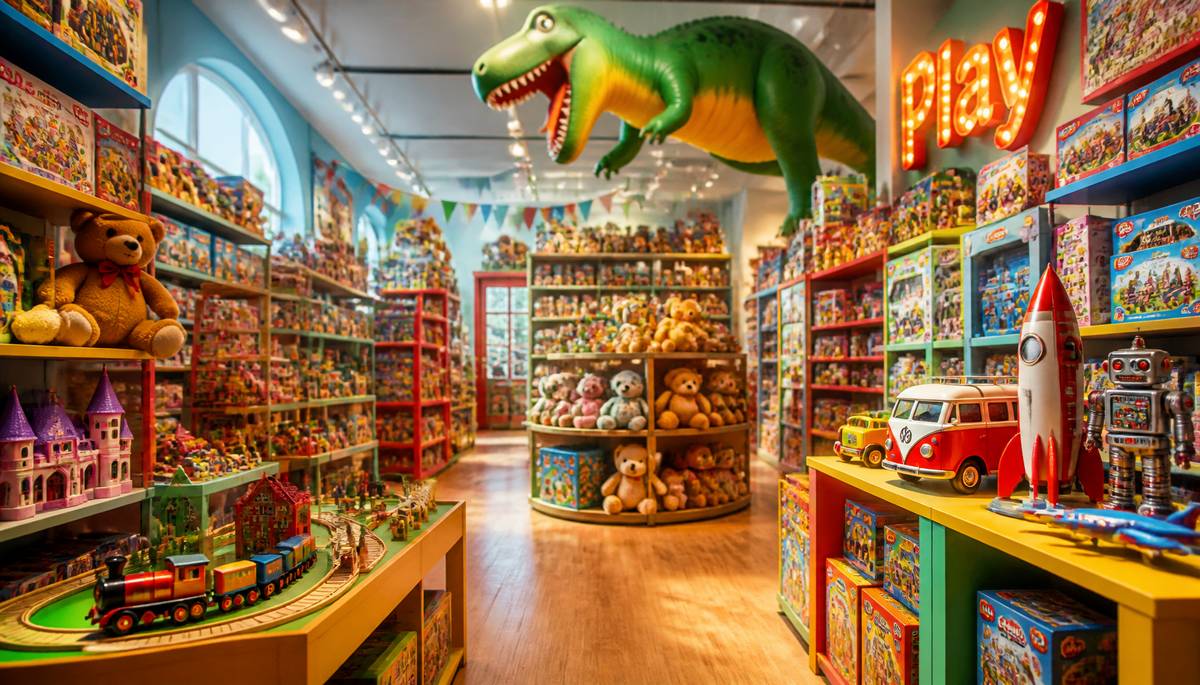 A toy shop can contain enough colour to make a rainbow look slightly underdressed. Bright boxes compete with stuffed animals, model cars occupy every available ledge, and somewhere near the ceiling a giant inflatable dinosaur is probably staring down at proceedings. All of this creates excitement for shoppers, but it presents a particular challenge for photography. The goal is to capture the abundance and sense of discovery without producing photographs that resemble an explosion in a toy warehouse.
Good toy shop photography therefore depends less on removing the character of the space and more on giving that character some structure. A successful photograph should make viewers want to explore the shelves rather than wonder where their eyes are supposed to land.
Give the Eye Somewhere to Start
Dense displays become much easier to photograph when the composition contains an obvious visual starting point. This might be a particularly colourful display, an unusual toy, a welcoming counter or a clearly defined aisle leading deeper into the shop.
Without such an anchor, dozens of equally prominent objects can compete for attention. The resulting photograph may accurately document everything that was present, but accuracy alone does not necessarily make an appealing image. Sometimes the photographer needs to decide that the enormous yellow giraffe is the star and the seventeen varieties of plastic tractor will have to accept supporting roles.
Leading lines can be particularly useful. Shelving, floor patterns and rows of displays can guide the viewer through the photograph while still allowing plenty of merchandise to remain visible. Shooting along an aisle rather than directly towards a wall of products can also introduce depth and turn densely packed stock into something that feels inviting.
Choose a Viewpoint With Purpose
Camera height has a surprisingly strong influence on the atmosphere of a toy shop photograph. A conventional adult eye-level viewpoint can work well for general interior views, but occasionally lowering the camera creates a much more appropriate perspective.
Photographing from roughly a child's viewing height can make shelves appear taller and displays more immersive. Toys that might seem like ordinary retail stock from an adult perspective can suddenly feel like objects waiting to be discovered. There is no need to photograph the entire shop from knee level, unless spending the afternoon impersonating a particularly determined five-year-old sounds appealing, but a few lower viewpoints can add variety.
Higher viewpoints have their uses too. Looking slightly downward can reveal the organisation of a display table or demonstrate how different product areas relate to one another. The important thing is to select the camera position deliberately rather than simply standing wherever there happens to be enough room for a tripod.
Frame Selectively Rather Than Showing Everything
Trying to fit every shelf, sign and stuffed rabbit into a single photograph usually weakens the result. Wide establishing shots are valuable, but they should be complemented by tighter compositions that isolate smaller areas of interest.
A beautifully arranged wooden-toy section might deserve its own photograph. So might a row of vintage-style dolls, a collection of board games or an elaborate model railway display. These selective views preserve the richness of the shop while removing unrelated distractions from the frame.
This approach also encourages a sense of discovery. Instead of explaining the entire shop immediately, the photographs reveal it gradually. One image establishes the space, another concentrates on a distinctive display, and another captures a small detail that gives the shop personality.
Organise the Colour Before Photographing It
Colour is one of a toy shop's greatest photographic assets, but uncontrolled colour can quickly overwhelm a composition. Before shooting, it is worth examining displays for boxes that have slipped out of alignment, products facing the wrong direction and stray items that have migrated into completely unrelated sections.
This does not mean making every shelf clinically perfect. Toy shops should feel abundant and playful. A little irregularity gives displays character, while too much tidying can make the shop resemble a catalogue warehouse awaiting inspection. The aim is controlled abundance: plenty to discover, but enough organisation for individual products and displays to remain readable.
Grouping similar colours can also create strong photographic areas. A collection of brightly coloured construction toys, for example, may work beautifully as one concentrated block of colour. Separating that display visually from neighbouring merchandise gives all that brightness room to breathe.
Let the Lighting Calm Things Down
Lighting can either organise a busy scene or make it considerably busier. Toy packaging frequently contains glossy plastic, metallic lettering and transparent windows, all of which are remarkably talented at reflecting ceiling lights directly towards the camera.
Whenever possible, use soft, even illumination and watch carefully for harsh reflections. Natural window light can be particularly attractive, although it should be balanced against the shop's existing lighting so that one side of the photograph does not look pleasantly sunny while the other appears to have entered a different time zone.
Bright areas naturally attract attention, so lighting can also establish a visual hierarchy. Allowing an important display to appear slightly brighter than its surroundings can draw the viewer towards it without requiring dramatic spotlights or extensive rearrangement. Dark corners, meanwhile, should retain enough detail to feel intentional rather than forgotten.
Leave Some Breathing Space
Negative space might seem almost impossible to find in a densely stocked toy shop, but even small areas of visual quiet can transform a photograph. A section of plain wall, an uncluttered floor area, the end of a shelving unit or even a relatively simple display can provide relief from surrounding colour.
Edges deserve particular attention. Half-visible signs, severed teddy bears and mysterious fragments of shelving can make an otherwise carefully composed photograph feel accidental. Before pressing the shutter, scan around all four sides of the frame. That enormous plush elephant may have survived many indignities during its retail career, but losing half its head to careless framing need not be another one.
Make Room for a Little Toy Story
The strongest photographs of toy shops do not merely record inventory. They communicate what it feels like to explore the space. Wide views establish where everything is, medium compositions reveal inviting displays, and close details reward curiosity with textures, characters and unexpected discoveries.
That mixture is what allows a colourful shop to look magical without becoming chaotic. Organisation provides the underlying structure, while selective framing, thoughtful viewpoints and controlled lighting preserve the excitement. The finished photographs should suggest that there is always another shelf worth investigating, another character hiding around the corner and perhaps one toy that an entirely sensible adult suddenly decides is absolutely necessary.
Toy shops are supposed to contain more visual energy than most retail spaces. Photography should not suppress that energy; it should give it somewhere to go. When every image has a clear subject and every frame leaves the viewer enough room to explore, even the busiest shop can look wonderfully inviting rather than wonderfully unhinged.
|
|